
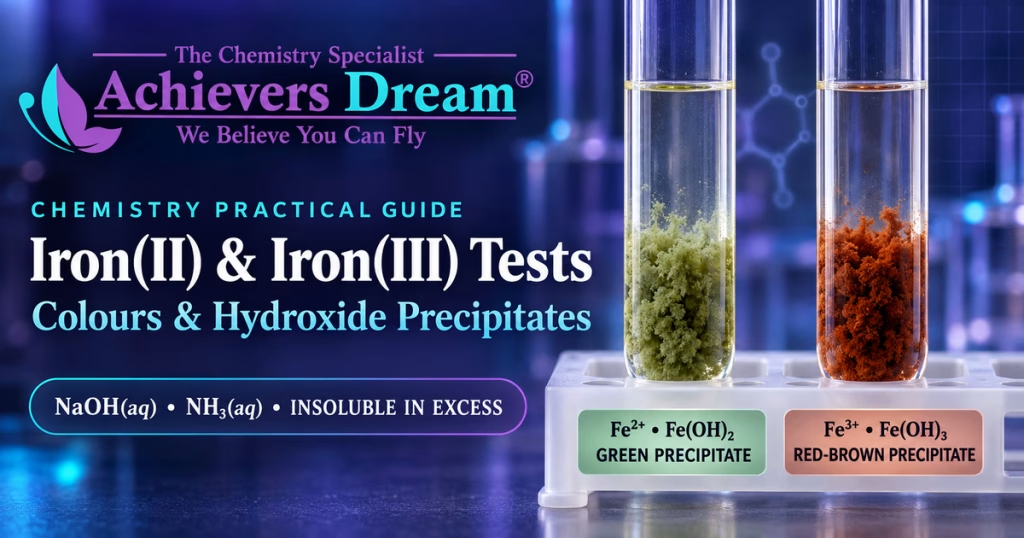
In the recent series by Achieversdream, our tutors prepared a lab preparation video for the practical series: Test for iron(II) ions (Fe2+).
Identify the following lab tests and watch the Fe2+ video linked below for the demonstration!
Test for iron(II) ions (Fe2+)
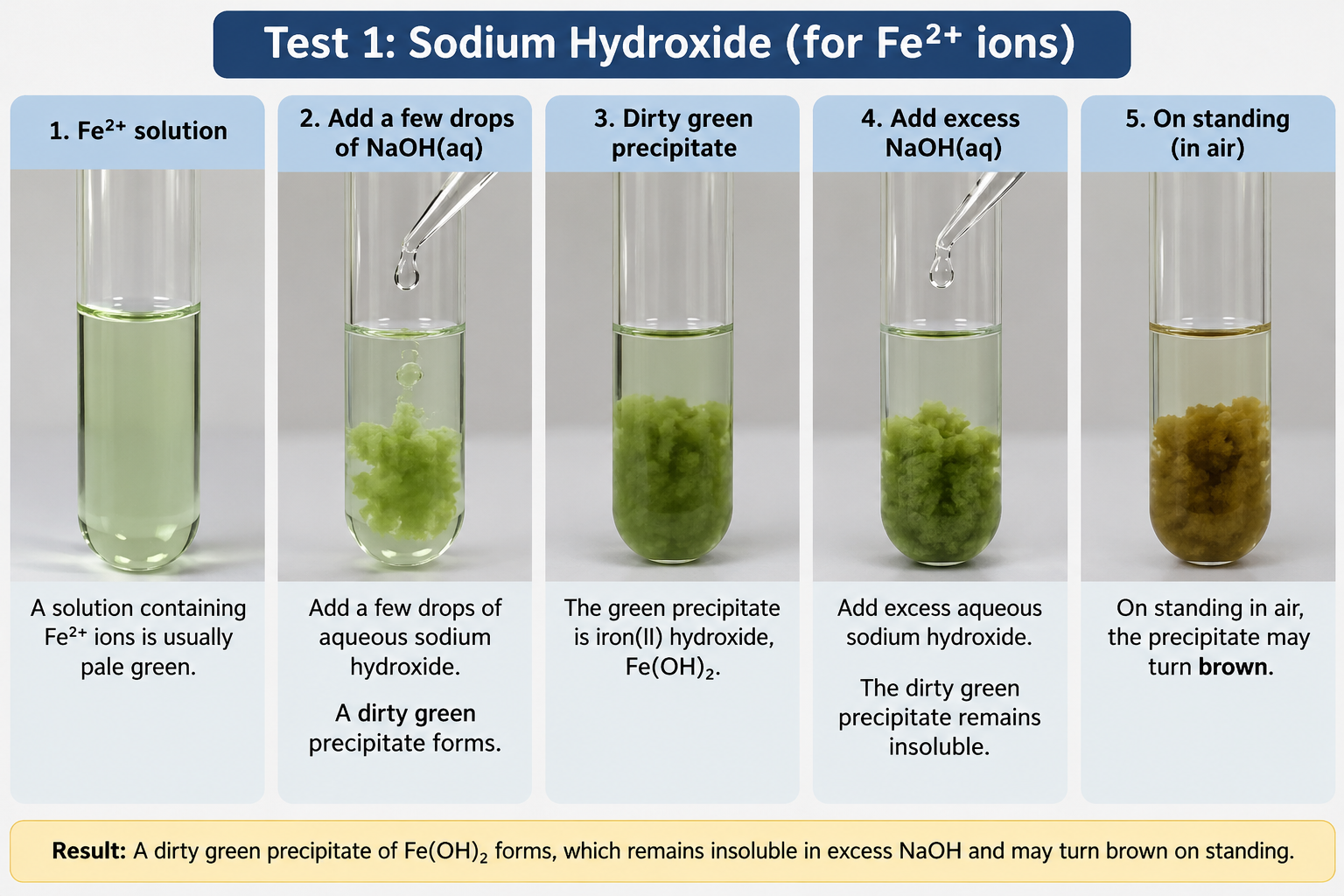
Test 1/ Sodium Hydroxide
A solution containing Fe2+ ions is usually pale green.
To carry out the experiment, add in a few drops of aqueous sodium hydroxide and you will be able to observe a dirty green precipitate.
This green precipitate is iron(II) hydroxide, Fe(OH)2.
To test the precipitate, add excess aqueous sodium hydroxide. The dirty green precipitate remains insoluble. It may turn brown on standing in air.
Test 2 /Ammonia
Add in a few drops of aqueous ammonia, NH3(aq) and you will be able to observe a dirty green precipitate of iron(II) hydroxide.
To test the precipitate, add excess aqueous ammonia. The dirty green precipitate remains insoluble.
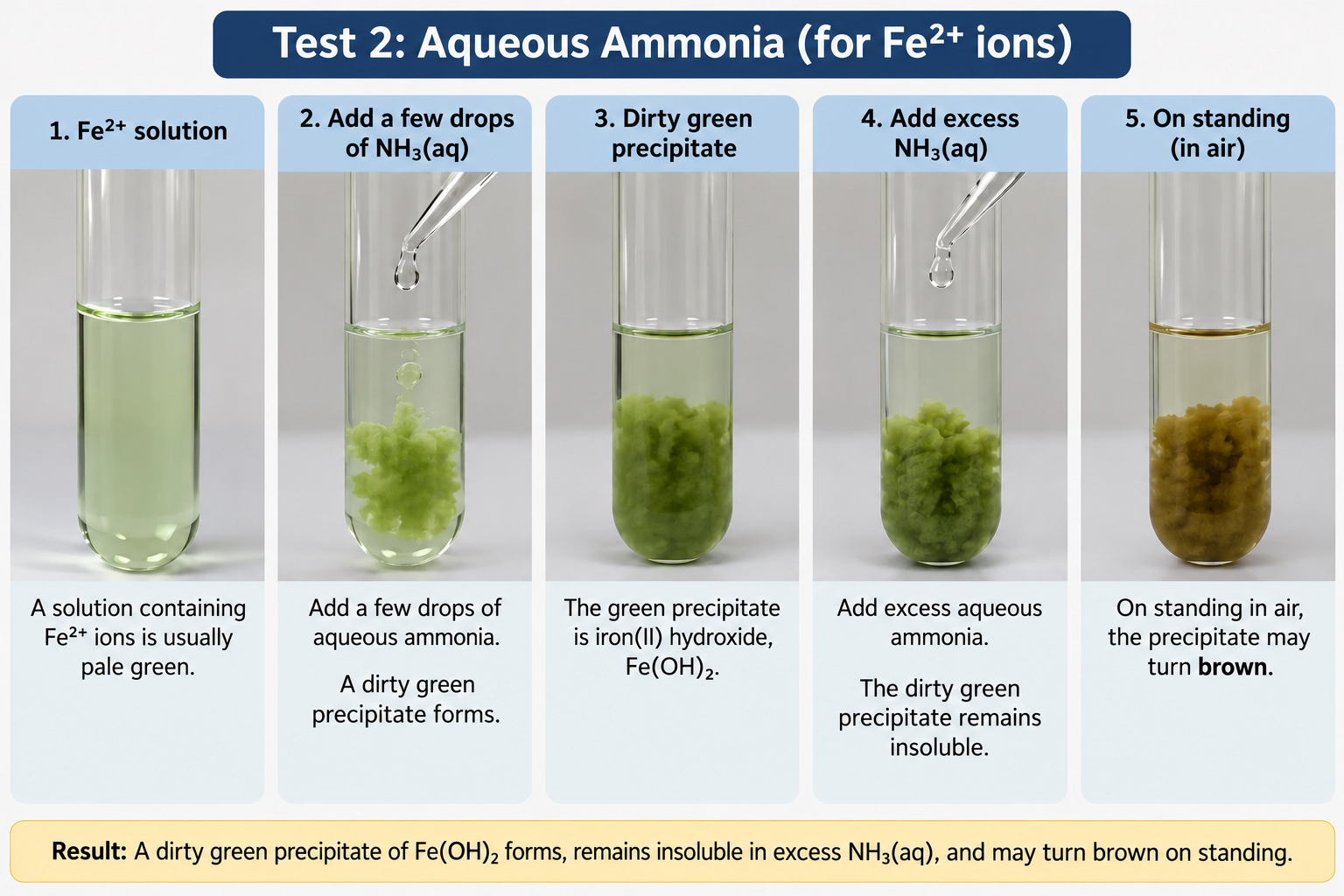
In both tests, the dirty green precipitate remains insoluble when excess reagent is added.
A dirty green precipitate that remains insoluble in excess aqueous sodium hydroxide and aqueous ammonia indicates that the original solution contains iron(II) ions, Fe2+.
Test for iron(III) ions (Fe3+)
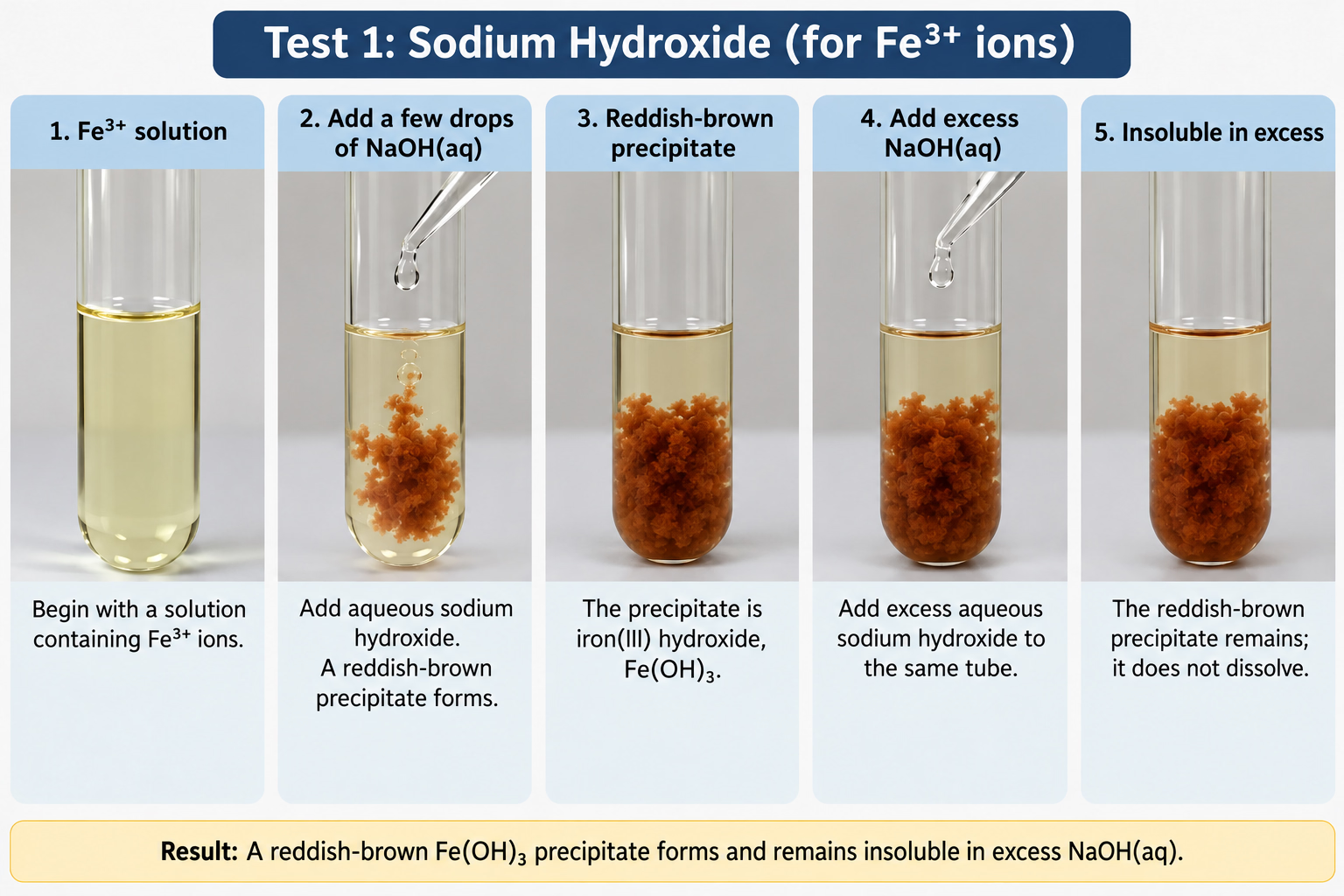
Test 1/ Sodium Hydroxide
A solution containing Fe3+ ions can appear yellow to yellow-brown.
To carry out the experiment, add in a few drops of aqueous sodium hydroxide and you will be able to observe a reddish brown precipitate.
This reddish brown precipitate is iron(III) hydroxide, Fe(OH)3.
To test the precipitate, add excess aqueous sodium hydroxide. The reddish brown precipitate remains insoluble.
Test 2 /Ammonia
Add in a few drops of aqueous ammonia, NH3(aq) and you will be able to observe a reddish brown precipitate of iron(III) hydroxide.
To test the precipitate, add excess aqueous ammonia. The reddish brown precipitate remains insoluble.
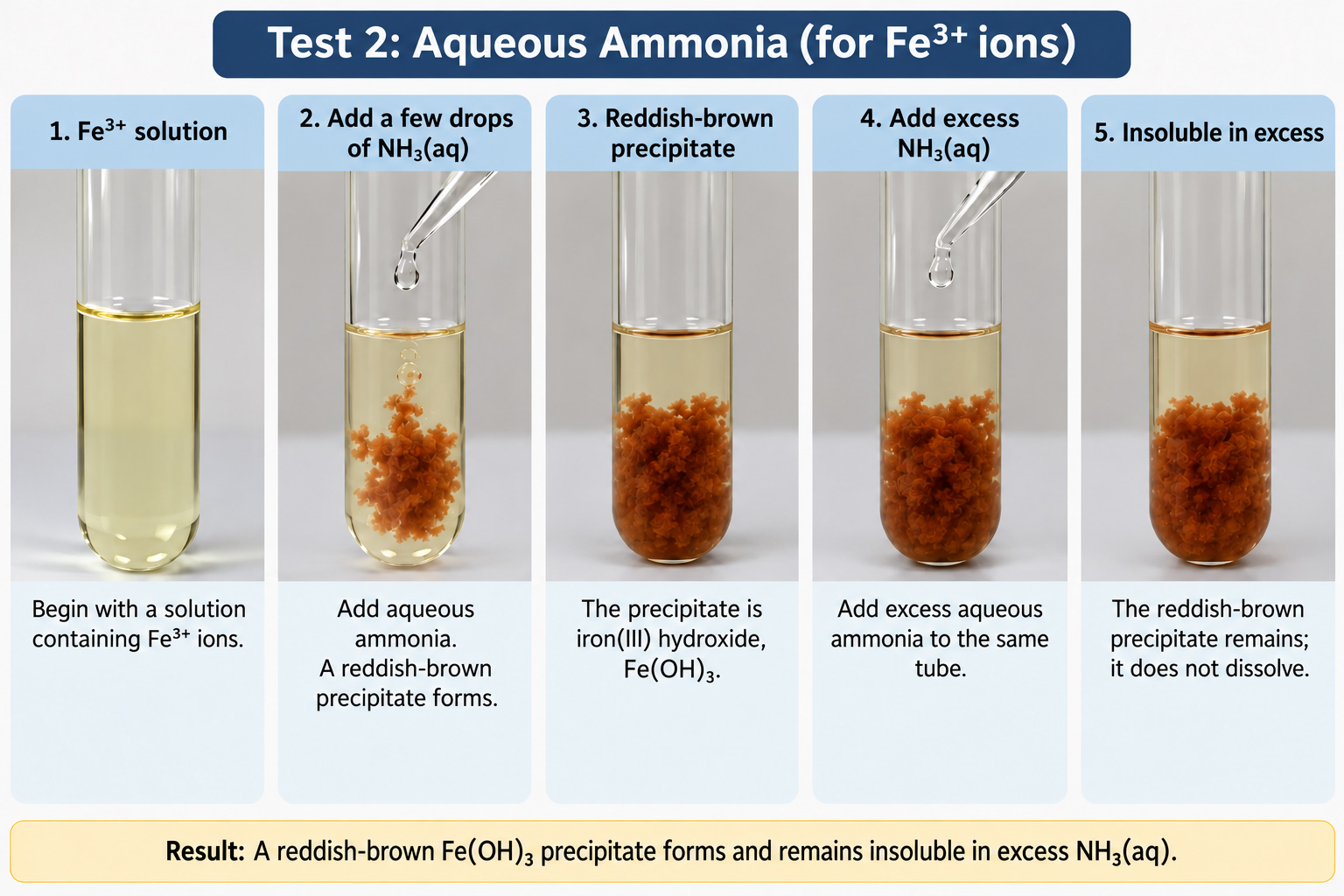
In both tests, the reddish brown precipitate remains insoluble when excess reagent is added.
A reddish brown precipitate that remains insoluble in excess aqueous sodium hydroxide and aqueous ammonia indicates that the original solution contains iron(III) ions, Fe3+.