
Have you ever wondered how a tiny seed turns into a tall tree or how a small egg hatches into a chirping chick? Both plants and animals go through different stages in their lives, called life cycles. Let’s dive into the fascinating world of life cycles and see how plants and animals grow and change over time!
The Life Cycle of Plants
Flowering plants, such as sunflowers and bean plants, have a life cycle that includes several stages:
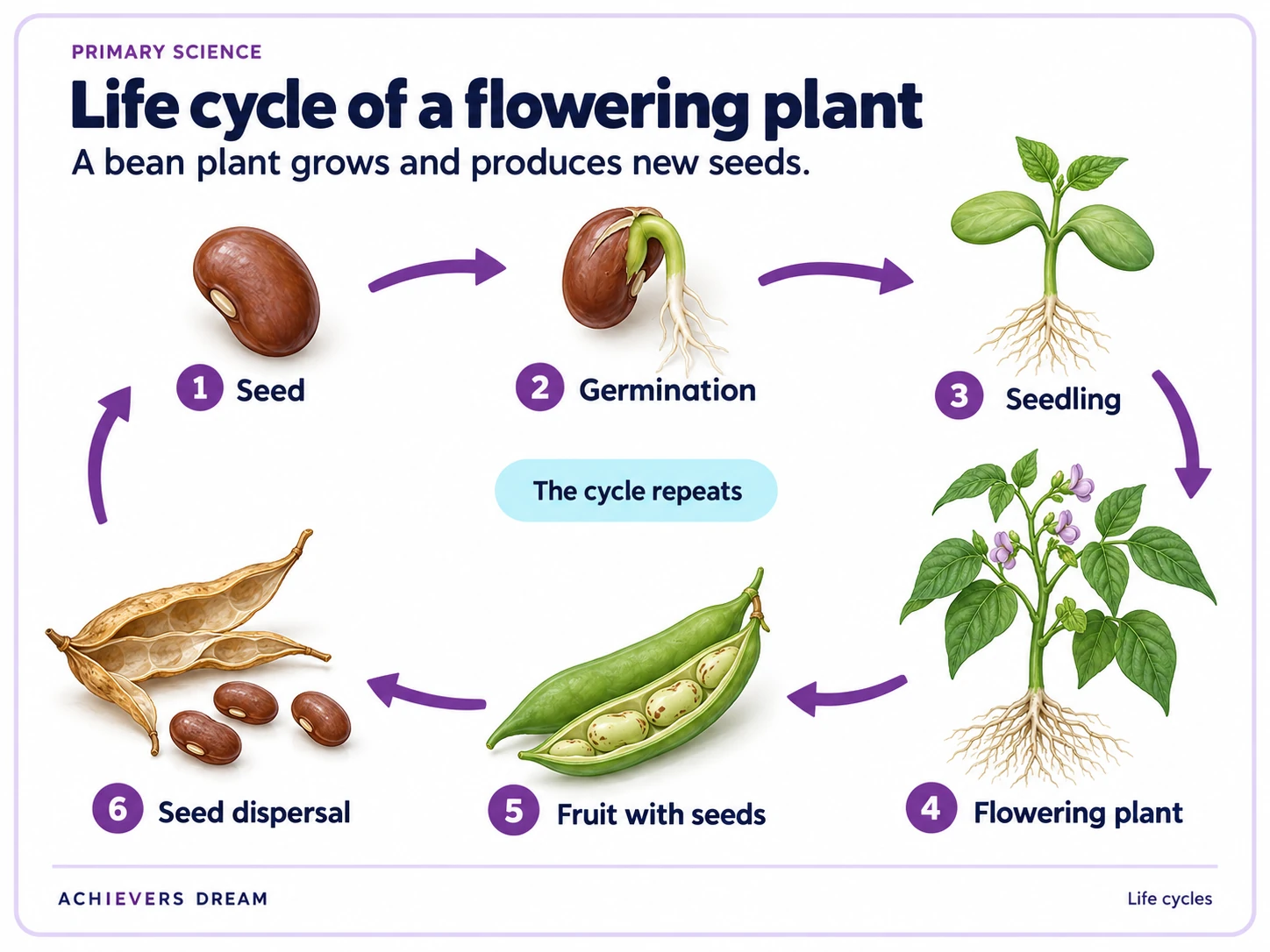
Seed Stage: The life cycle begins with a seed, which contains the embryo of a future plant. Think of a sunflower or a bean seed.
Germination: When a seed gets water, oxygen, and the right temperature, it can begin to sprout. Sunlight is not essential for every seed to germinate. A tiny root pushes into the soil, while a small shoot reaches up toward the light. For example, planting a bean seed in moist soil.
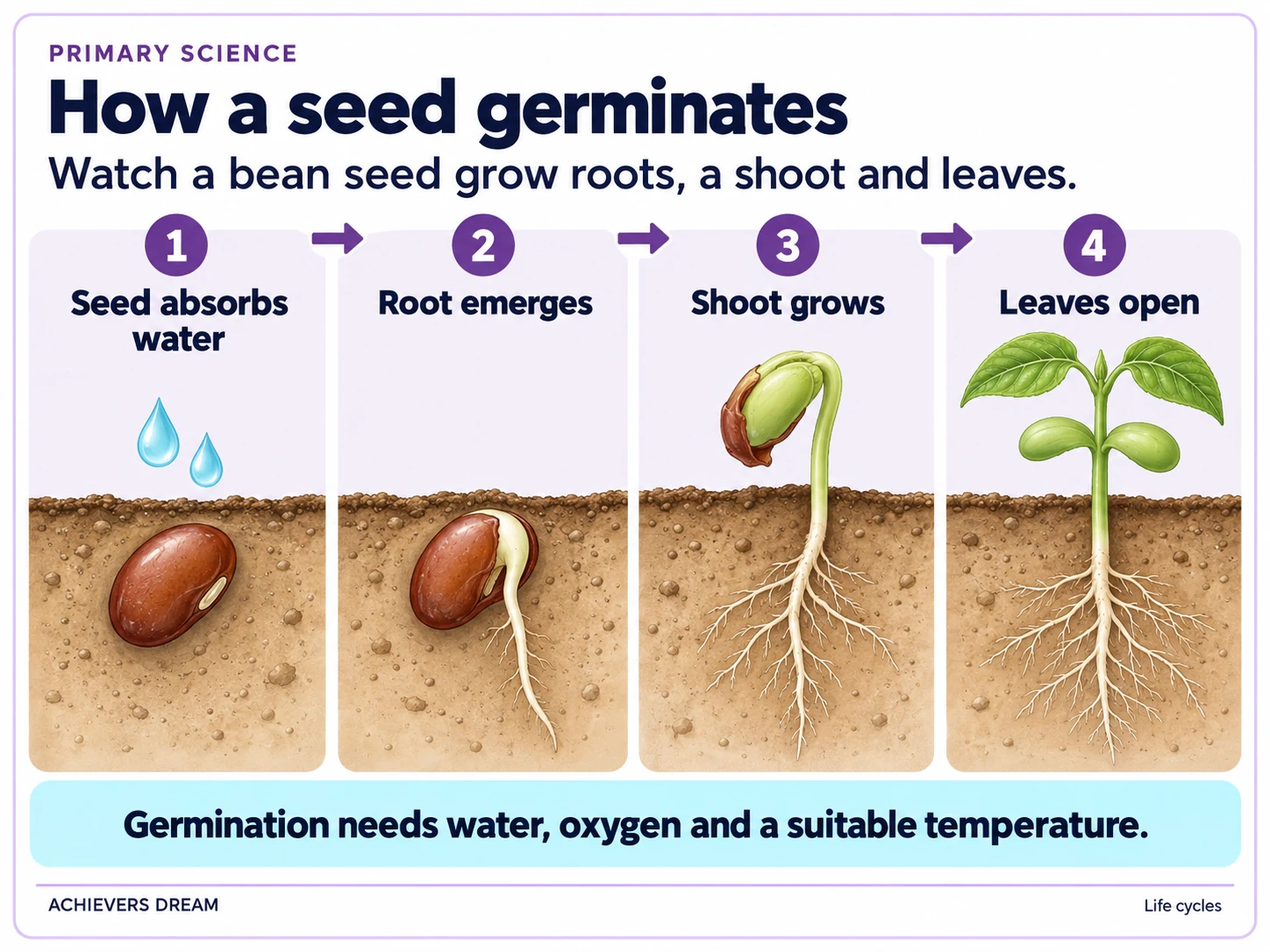
Seedling Stage: The sprout grows into a seedling, a young plant with small leaves. The plant starts making its own food through photosynthesis.
Adult Plant: The seedling grows into an adult plant with a strong stem, fully developed leaves, and sometimes flowers. A mature sunflower is an example.
Flowering and Reproduction: Adult flowering plants produce flowers for reproduction. When pollen is transferred from an anther to the stigma of the same flower or another flower of the same species, pollination occurs. After fertilisation, ovules develop into seeds. Bees help transfer pollen from one flower to another.
Seed Formation and Dispersal: After fertilisation, ovules develop into seeds and the ovary develops into a fruit. Seeds may be dispersed by wind, water, animals, or fruits that split open, and the cycle can begin again. An apple tree producing apples, which contain seeds, is an example.
Fun Fact!
One of the world’s oldest known living individual trees is a bristlecone pine in California, over 4,800 years old!
The Life Cycle of Animals
Animals also have life cycles with different stages. Not every animal goes through all the stages described below. A butterfly develops from egg to larva to pupa to adult, while a chicken develops from egg to chick to adult. Frogs do not have a pupa stage.
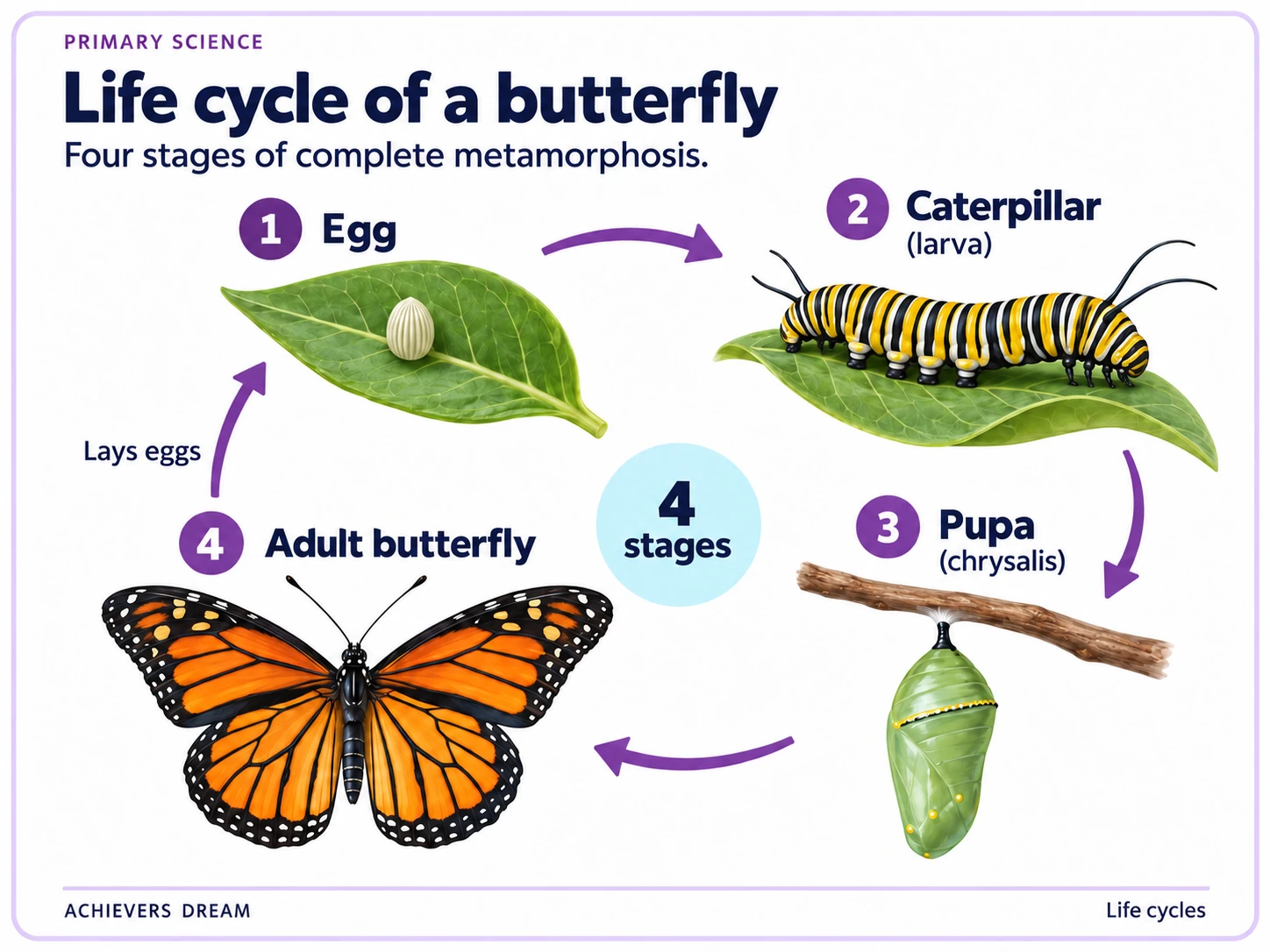
Egg Stage: Many animals start their lives as eggs, which contain nutrients that help the embryo grow. Examples include a chicken egg or a butterfly egg.
Larva Stage (for some animals): Some animals, like butterflies and frogs, go through a larval stage. The larva looks very different from the adult and usually has a different way of living and eating. A caterpillar is the larva of a butterfly.
Pupa Stage (for some animals): In this stage, the larva transforms into an adult. For insects like butterflies, this is called the pupa stage, and a butterfly’s pupa is known as a chrysalis. A caterpillar forming a chrysalis before becoming a butterfly is an example. Many moth caterpillars spin a silk cocoon around their pupa.
Juvenile Stage: After hatching or being born, young animals grow and develop. In animals such as chickens, juveniles look like adults but are not yet fully grown. A chick growing into a chicken is an example.
Adult Stage: The animal reaches its adult form, where it can reproduce and continue the life cycle. A butterfly emerging from the chrysalis, or an adult frog are examples.
Fun Fact!
Some frogs in captivity have been known to live for more than 20 years!
Conclusion
Understanding the life cycles of plants and animals helps us appreciate the wonders of nature. From tiny seeds to towering trees and from small eggs to majestic animals, each stage of life is a step in the incredible journey of living things. Keep observing and exploring the natural world around you, and you’ll discover even more amazing facts about life cycles!
Start Your Chemistry Tuition Journey With Achievers Dream
At Achievers dream, we offer specialised Primary Science Tuition, O Level Chemistry Tuition, Lower Secondary Science Tuition and JC Chemistry tuition. Our team consists of ex-MOE HOD’s, NIE teachers and full-time tutors.
As a top tuition centre in Singapore, students will be provided with a wide range of information from sources such as exclusive cheat sheets, sec 1 science notes, science revision guides or other supplementary/topic by topic notes.
Join Our Exclusive Telegram Group Here
Click Here for Free Access to our coloured Chemistry notes
We provide fully customised lessons in conjunction with up-to-date facilities such as our chemistry laboratory and a student portal. Our team will be there for you to support your learning journey, start now and achieve better results