
Guide to Acid-Base Chemistry : Primer
This guide is designed to equip you with the essential understanding needed to master acid-base chemistry.
Content
- Acid Base Introduction,
- Theories of Acid
- PH Scale
FREE in depth JC 2 Acid-Base Equilibra Notes – Includes Buffer/Acid Base Titration Curves
FREE in depth JC 2 Acid-Base Solubility Product Notes – Includes Le Chatelier’s Principle (LCP) and Complex Ions
Get ready to unravel the mysteries of acid-base chemistry as we take you on a journey that will strengthen your understanding and appreciation of this fascinating area of science. Let’s dive in!
–
Acids Base Introduction
At the core of acid-base chemistry lie the fundamental concepts of acids and bases. Acids are substances that release hydrogen ions (H+) when dissolved in water, while bases are substances that accept these hydrogen ions.
Acids
Acids can be categorized into different types based on their strength. Strong acids, such as hydrochloric acid (HCl) and sulfuric acid (H2SO4), are substances that completely dissociate in water, releasing a high concentration of hydrogen ions.
Weak acids, on the other hand, only partially dissociate, resulting in a lower concentration of hydrogen ions. Examples of weak acids include acetic acid (CH3COOH) and carbonic acid (H2CO3).
Bases
Bases can also be classified as either strong or weak, depending on their ability to accept hydrogen ions.
Strong bases, like sodium hydroxide (NaOH) and potassium hydroxide (KOH), readily accept hydrogen ions and completely dissociate in water. Weak bases, such as ammonia (NH3) and bicarbonate (HCO3-), only partially accept hydrogen ions, leading to a lower concentration of hydroxide ions (OH-) in the solution.
–
Three Theories of Acid and Bases/ Equilibria
- Arrhenius Theory
Arrhenius acids form hydrogen ions in aqueous solution and Arrhenius bases form hydroxide ions in aqueous solution. - Brønsted–Lowry acid–base theory
A brønsted acid is a proton donor, while a brønsted base is a proton acceptor. - Lewis Theory
A Lewis acid is an electron-pair acceptor while a Lewis base is an electron-pair donor.
PH scale and the concept of acidity and alkalinity
The pH scale is a fundamental tool in acid-base chemistry, used to quantify the acidity or alkalinity (basicity) of a solution. The pH scale ranges from 0 to 14, with 7 representing a neutral solution. Values below 7 indicate an acidic solution, while values above 7 indicate a basic or alkaline solution.
The pH scale is a logarithmic scale, meaning that each unit change represents a ten-fold change in the concentration of hydrogen ions. For example, a solution with a pH of 5 has ten times more hydrogen ions than a solution with a pH of 6, and a solution with a pH of 9 has ten times fewer hydrogen ions than a solution with a pH of 8.
Acid-base reactions and the role of water
At the heart of acid-base chemistry lies the concept of acid-base reactions, which occur when an acid and a base interact. These reactions involve the transfer of hydrogen ions (H+) from the acid to the base, resulting in the formation of a new substance called salt and water.
The role of water in acid-base reactions is crucial, as it acts as the medium for the transfer of hydrogen ions. When an acid and a base are mixed in water, the hydrogen ions from the acid combine with the hydroxide ions (OH-) from the base to form water molecules (H2O).
This process can be represented by the following general equation:
Acid + Base → Salt + Water
For example, when hydrochloric acid (HCl) reacts with sodium hydroxide (NaOH), the resulting products are sodium chloride (NaCl) and water (H2O):
HCl + NaOH → NaCl + H2O
This is a core principle which is why it has become one of the first concepts to be taught to students at the secondary level. But can acid and base react to form salt only without water (‘-‘)? In most cases, no, strong acid and bases neutralize, though the salt may vary, h20 is always present. Refer to the following section/next article for an understanding of reactions.)
Types of Acid-Base Reactions
Acid-base reactions can be classified into several types, each with its own unique characteristics and applications. The most common types of acid-base reactions include:
- Neutralization reactions:
- These occur when an acid and a base react to form a salt and water.
- The hydrogen ions from the acid combine with the hydroxide ions from the base, resulting in a neutral solution.
- Neutralization reactions are widely used in the production of salts, the treatment of wastewater, and the regulation of pH in various industries.
- Acid-base titrations:
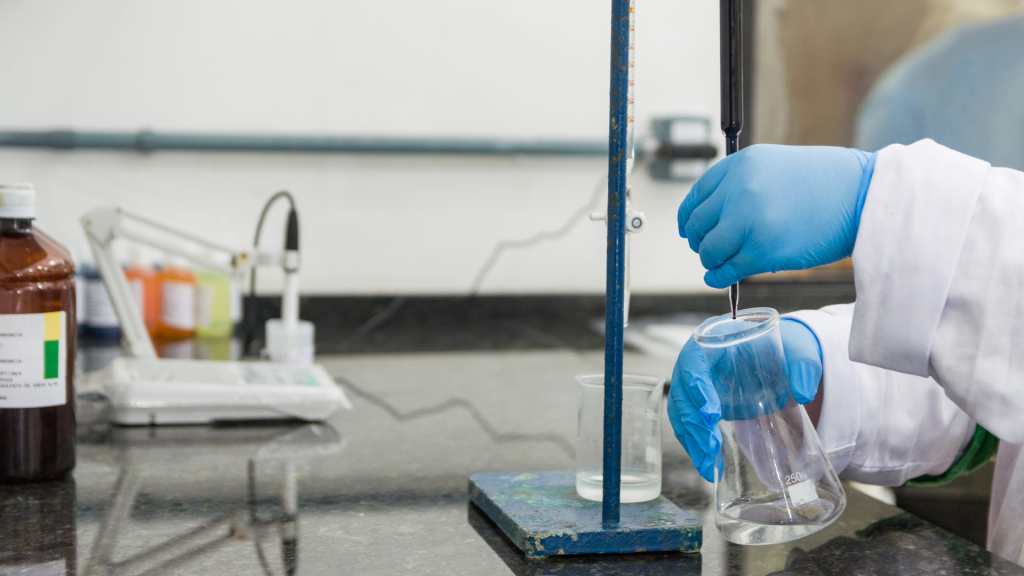
- Titrations are analytical techniques used to determine the concentration of an unknown acid or base by carefully adding a known amount of the other reactant.
- The endpoint of the titration, where the acid and base have been completely neutralized, is often detected using acid-base indicators.
- Titrations are essential in various fields, such as analytical chemistry, environmental monitoring, and quality control.
- Amphoteric reactions:
- Amphoteric substances are those that can act as both an acid and a base, depending on the conditions.
- Water is a prime example of an amphoteric substance, as it can donate or accept hydrogen ions in certain situations.
- Amphoteric reactions are crucial in understanding the behavior of water and its role in maintaining pH balance in biological systems and natural environments.
Congratulations on making it through this comprehensive primer on salts and bases!
You’ve tackled some complex concepts and done an excellent job. Now, it’s time to take a breather and relax your mind. When you’re ready, join us for the next article, where we’ll explore the fascinating uses of acids and bases. It’s a lighter read with fewer calculations, offering a fresh perspective on these essential chemical compounds. Happy learning!

Start Your Chemistry Tuition Journey With Achievers Dream
At Achievers dream, we offer specialised Primary Science Tuition, O Level Chemistry Tuition, Lower Secondary Science Tuition and JC Chemistry tuition. Our team consists of ex-MOE HOD’s, NIE teachers and full-time tutors.
As a top tuition centre in Singapore, students will be provided with a wide range of information from sources such as exclusive cheat sheets, sec 1 science notes, science revision guides or other supplementary/topic by topic notes.
Join Our Exclusive Telegram Group Here
Click Here for Free Access to our coloured Chemistry notes
We provide fully customised lessons in conjunction with up-to-date facilities such as our chemistry laboratory and a student portal. Our team will be there for you to support your learning journey, start now and achieve better results